
Adhesives & Application
Best Adhesive for Stair Treads: Choose by Tread and Substrate

Tread material, support and substrate determine the adhesive shortlist.
In this guide
The best adhesive for stair treads is the one approved for the exact tread material, substrate and stair assembly. A wood tread fixed to structural supports, a decorative wood cap over an existing step, and a rubber covering bonded to concrete need different selection decisions. A high-strength general construction adhesive is not an automatic answer for all three.
Start by identifying which part of the stair you are installing. Then check the stair or tread manufacturer’s installation requirements, including mechanical attachments where required. Adhesive selection should support that design. It should never be used to guess the capacity of a loose, damaged or inadequately supported stair.
Best adhesive for stair treads by installation type
| Installation | What to shortlist | What decides approval |
|---|---|---|
| Solid wood tread on structural supports | A wood-bonding or construction adhesive specified for the designed connection. | Support, joinery, required fasteners, wood condition and bond-line limits. |
| Wood or engineered tread cap over an existing step | The cap system’s approved adhesive for both bonding faces. | Full bearing, existing finish, tread thickness, nosing and complete stair geometry. |
| Rubber or vinyl tread over concrete | A resilient-tread adhesive approved for the material and substrate. | Concrete moisture and pH limits, spread method, working time and nosing detail. |
| Tile or stone stair finish | A compatible tile or stone installation system. | Substrate, bedding, movement accommodation and edge details; do not substitute cartridge glue casually. |
This is a selection map, not a universal fixing schedule. A product described as construction adhesive may suit some timber applications while being unsuitable for plasticized vinyl or a thin resilient tread. The intended use and assembly instructions carry more weight than the category printed on the container.
Separate structural treads from decorative coverings
A structural tread transfers the user’s load into the stair supports. Its thickness, span, bearing and attachments are design decisions. A decorative tread cap or resilient covering usually relies on an existing stair beneath it. Before buying adhesive, establish whether that underlying stair is sound and whether the proposed covering changes its geometry.
If a step rocks, deflects excessively or has decayed material, repair the underlying cause first. Filling a gap with glue can conceal a defect without providing an adequate load path. Likewise, a squeak may arise from moving supports or connections elsewhere in the assembly. The sound does not prove that the visible tread-to-riser joint is the source.
A retrofit also changes finished dimensions. Check the full flight, landings, nosing projection and transitions after adding the new material. An apparently small build-up at one step can create an inconsistent walking surface. Have the finished arrangement checked against the requirements applicable to that building rather than treating adhesive choice as the only acceptance criterion.
Wood tread adhesives: fit and support come first
For an overview of bonding different building materials, see HANHU’s construction adhesive selection guide. The stair-specific checks below determine how that broader guidance applies to a tread installation.
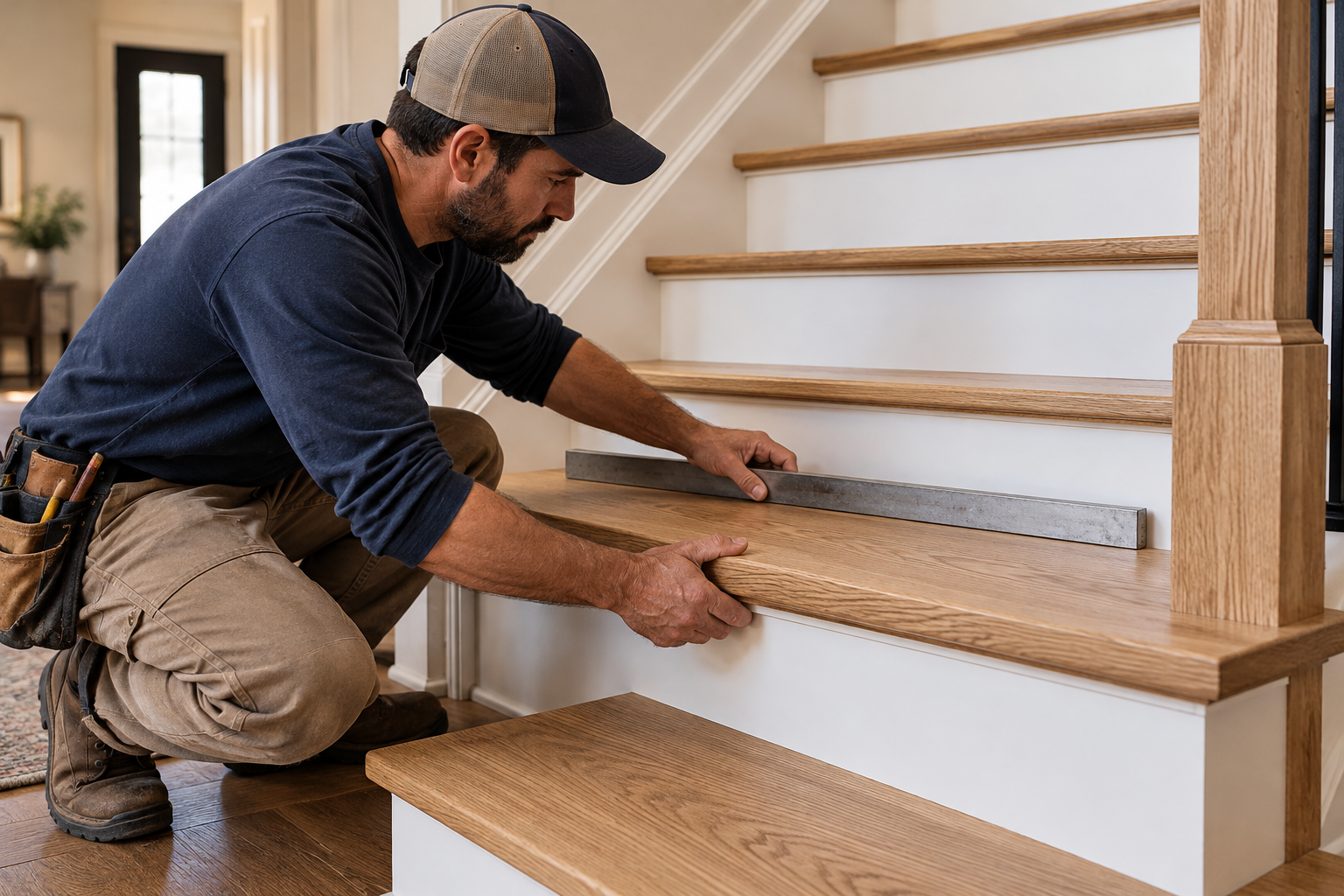
For a wood tread, record the wood species, whether it is solid or engineered, and the condition of both bonding faces. An unfinished underside behaves differently from a factory-coated surface. Check whether finish, wax, oil or another contaminant needs removing, and whether the removal method is compatible with the tread system.
Dry-fit each component before application. Look for rocking, missing bearing and gaps beyond the adhesive’s permitted bond-line thickness. A thick bead cannot be assumed to replace a shim, repair material or a properly fitted support. Use only the packing or leveling detail allowed by the stair design and adhesive instructions.
The USDA Forest Products Laboratory’s Wood Handbook chapter on bonding explains that bond performance involves the wood, adhesive and interface together. It also discusses moisture, surface condition and assembly. These principles explain why a well-selected adhesive can still fail when the actual bonding surfaces are unsuitable.
For procurement, ask for written suitability for the intended assembly, not merely a statement that the product sticks to wood. Confirm working time, application pattern, permitted thickness, restraint during cure and any required mechanical attachments. If the stair design specifies screws or other connections, selecting a stronger-sounding adhesive does not remove them.
Rubber and vinyl treads need their own adhesive system
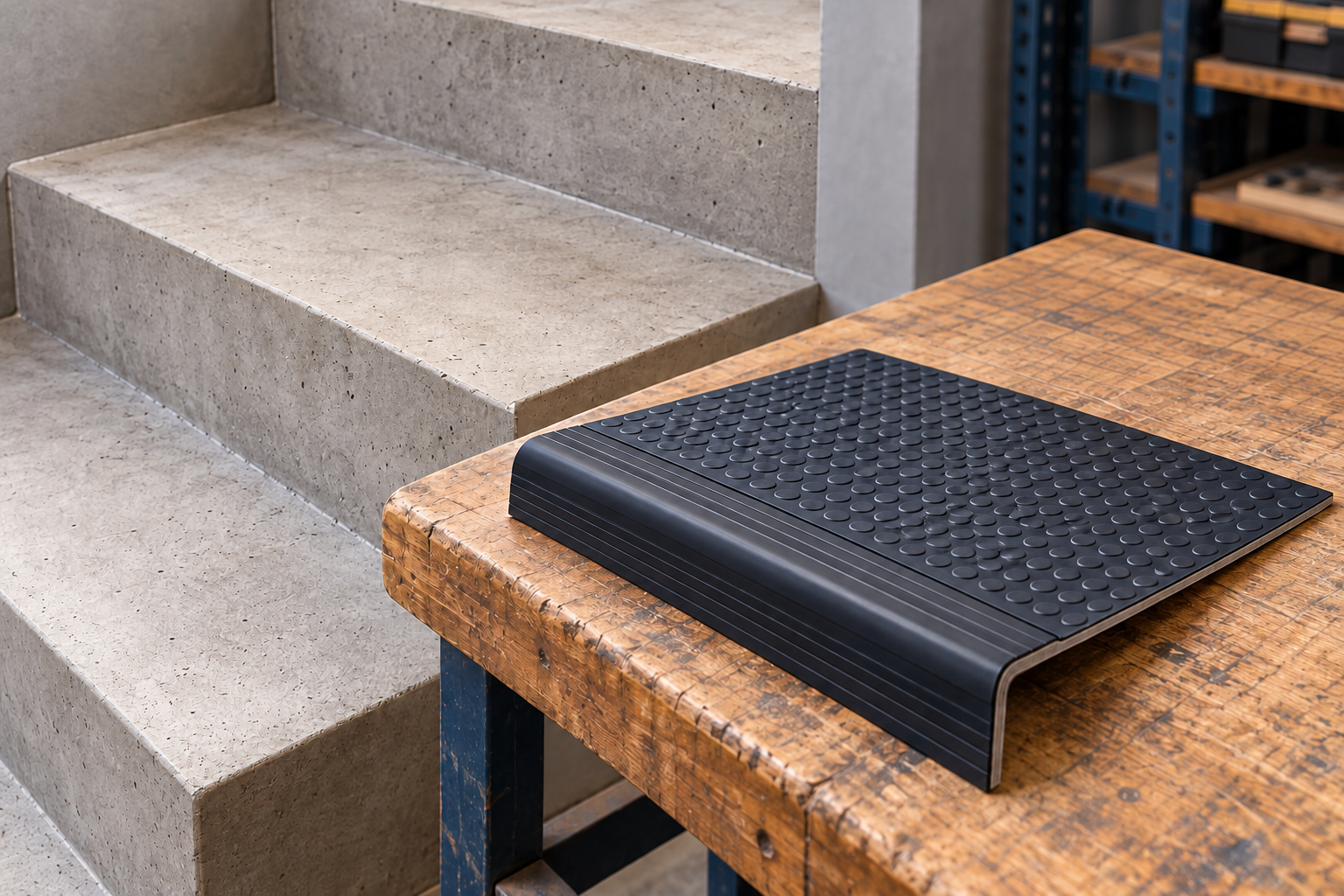
Resilient stair coverings have material-specific requirements. Their backing, flexibility and formulation affect the bond. The approved adhesive might be a spread-applied product with a defined open time, or another specified system. Do not substitute a few beads of general cartridge adhesive when the installation requires a controlled, continuous spread.
Nosing deserves particular attention because it receives repeated contact near the step edge. Some systems require a separate nosing material or a dedicated treatment at that junction. Others use an integrated profile. Follow the exact tread system’s detail, including the fit around the nose, rather than assuming the flat tread adhesive resolves every edge condition.
The federal Unified Facilities Guide Specification for Resilient Flooring addresses substrate testing and installation to the material manufacturer’s instructions. It includes stair-tread installation requirements. It is a guide for project specification, not permission to interchange all resilient flooring adhesives on stairs.
Read both documents together: the tread instructions and the adhesive instructions. A mismatch in approved substrates, temperature range or application method should be resolved before work begins. For distributors supplying replacement coverings, retaining the exact tread model is useful because an adhesive suitable for a previous product may not suit a later material revision.
Check concrete moisture and surface condition
Concrete that looks dry can still be unsuitable for the proposed adhesive. Specify the moisture and alkalinity tests required by the resilient-tread system and compare results with that adhesive’s limits. Surface appearance alone cannot establish the condition within the substrate or the compatibility of residues left by previous floor coverings.
Remove weak material and incompatible coatings using an appropriate preparation method. A primer or patching compound must also belong to the compatible system. Bonding to a thin layer of old adhesive only works if that layer is specifically permitted and sound; otherwise the new installation relies on an uncertain interface below it.
Distinguish environmental moisture from a plumbing leak or water entry. An adhesive described as moisture resistant does not automatically remediate an active water problem. If dampness is recurring, establish its cause and repair strategy before enclosing the surface. Include the expected cleaning regime and indoor or outdoor exposure in the product enquiry.
Two stair projects that need different adhesive choices
Consider a timber tread cap fitted over a sound, existing wood step. The first shortlist is the cap system’s approved wood-to-wood adhesive, used within its permitted bond-line thickness. If the underside is factory finished, the selection must cover that finish too. A cartridge product advertised for general building work should be rejected if the cap instructions require another bonding method.
Now consider a molded rubber tread on concrete. Start with the tread system’s listed resilient adhesive and its required nosing treatment. Check the concrete against that adhesive’s moisture and alkalinity limits before installation. A wood adhesive that performed well on the first staircase does not become suitable here simply because both surfaces will carry foot traffic.
These examples also explain why choosing only by the word polyurethane is unreliable. The required application method, contact area and substrate approval can differ between products with similar chemistry. Select a grade that meets every requirement in the assembly instructions; then compare practical working time, cleanup and installed cost among the candidates that remain.
Installation timing: open time is not cure time
Working time tells the installer how long a product remains usable under stated conditions. Open time concerns the interval after spreading, while assembly and cure requirements describe later stages. These are not interchangeable. A fast initial grab can help hold a component in position while still requiring a longer protected period before foot traffic.
Plan the work so the staircase can be taken out of service for the required period. Arrange a safe alternative route where needed. Walking on newly bonded treads to complete work above can disturb the bond or shift the nosing. A dry-looking edge is not sufficient evidence that the adhesive beneath a covering has cured for use.
Check the temperature of the materials and substrate, not only the room air. Storage, acclimation and site conditions can affect installation behavior. Keep batch information and record significant deviations from the specified conditions. Follow the instructions for ventilation, personal protection and cleanup without improvising chemical mixtures around new finishes.
Diagnose common stair-tread bonding problems
An edge that lifts can indicate poor nosing fit, unsuitable adhesive, movement or an installation-timing problem. Do not simply press it down and add a surface bead. Inspect the failed area and determine whether the repair requires removing the covering, preparing the substrate again, and replacing the affected tread according to the system instructions.
A wood tread that rocks after installation may have inadequate bearing or a connection problem. Adding adhesive at the visible edge may leave the support issue untouched. Keep the stair out of service if the tread is loose, and have its support and attachments assessed before deciding on a repair material.
If adhesive remains soft, investigate compatibility, application thickness and cure conditions. If cured material separates cleanly from one surface, investigate that interface and its preparation. These observations guide the questions to ask; they do not identify the cause conclusively on their own. Photograph both bonding faces during removal so useful evidence is not discarded.
Compare installed cost, not just container price
Price the adhesive together with primer, approved patching, nosing materials, application tools and waste. Include the labor needed to prepare existing steps and the time required to keep them closed. A lower container price may produce a higher installation cost if it needs additional preparation or causes inconvenient staging across several flights.
Measure each step and estimate consumption using the selected product’s coverage method. A trowel-applied adhesive may be quoted by area, while a bead-applied system depends on bead dimensions and pattern. Do not convert those figures directly without knowing the installation requirement. Allow for the actual substrate texture and unavoidable handling losses using a project-specific allowance.
To discuss a particular stair application, send the tread material, substrate and installation detail. Include photos, the proposed tread model, site conditions and the required reopening schedule.
Frequently asked questions about stair tread adhesive
Can I use construction adhesive for wood stair treads?
Yes, when the specific construction adhesive and stair design permit that use for the exact materials and joint. Confirm bearing, fit, application pattern and required attachments. A general-purpose label does not establish that an adhesive is suitable for every structural tread or retrofit cap.
Is polyurethane always the best adhesive for stairs?
No. Chemistry alone does not settle the choice. Wood connections, engineered caps and resilient coverings have different installation requirements. Compare approved applications, bond-line limits, substrate conditions and service exposure. The product that meets the complete assembly specification is the relevant candidate.
Can I glue rubber stair treads onto old adhesive?
Only if the tread and adhesive system specifically allow the retained material and its condition meets the preparation requirements. Otherwise, removal and substrate preparation may be necessary. The new bond cannot be more reliable than a weak or incompatible layer beneath it.
How long before people can use newly bonded treads?
Use the exact system’s return-to-service instructions for the actual conditions. Initial grab, surface drying and full cure are different stages. Plan access restrictions before installation; do not apply a generic overnight rule to every adhesive or stair covering.
Will more adhesive stop a stair squeak?
Not necessarily. Identify the moving component and check the support and connections. Excess adhesive may exceed the allowed bond-line thickness without correcting the movement. A repair should address the cause and follow the stair assembly’s fixing requirements.
Select the adhesive after defining the stair assembly
Choose by tread material, substrate, support, nosing detail and service conditions. Obtain a compatible installation method and plan a protected cure period. That gives the installer a repeatable process and gives the buyer a useful answer to the search for the best adhesive for stair treads.
References and further reading
- USDA Forest Products Laboratory’s Wood Handbook chapter on bonding — U.S. Department of Agriculture, Forest Products Laboratory; Wood Handbook, Chapter 10 (2021).
- Unified Facilities Guide Specification for Resilient Flooring — USACE / NAVFAC / AFCEC, UFGS 09 65 00 (November 2024), Sections 3.3 and 3.15; government guide specification hosted by WBDG.